What You Might Wanna Know About Me
- Cyber Six
- All artwork and animation in this blog unless otherwise stated is Copyright © 2015 Eric R. Watson 'AKA' Cyber Six (Cyber Six is not intended to be a play on words. It is in fact a comic book and animation. You may read about them if you'd like by following this link. http://en.wikipedia.org/wiki/Cyber_Six) All Rights Reserved. All artwork and content on this blog are property of the artist unless otherwise indicated. Do not use, reproduce, post, copy, or distribute any image or media without permission. I'm an artist and flash animator. Recently, I've begun learning Maya 8.5. Okay, my avatar is not a picture of me. In fact, it is a picture of a famous Japanese singer who sang in an all girl pop group named SPEED during the mid to late 90s. Her name is Hiroko Shimabukuro. Hiro for short. Unfortunately, they disbanded several years ago. I recently found out they are back together and singing as SPEED. Freelance Union Article: 5 Tips for Preventing Procrastination. "Prolific people don’t wait to be moved, they begin the work, and the work moves them to create more." ~ Jonathon Kastner
My Archival Space.. No, It's NOT The Final Frontier
Sites to See
- CTN eXpo
- Rad How To
- Creature Box
- Lines and Colors
- FZD Blog
- FZD School of Design
- FZDSCHOOL - Design Cinema
- Pinterest - Human Anatomy
- Pinterest - Character Design
- Bleu-Prints - (My Pro Site)
- The Animation Archive
- Inspector Cleuzo
- mylydyneo - French Blog - melody.nastasia
- Art Books & Art Instruction
- Temple of the Seven Golden Camels
- Flooby Nooby
- Character Design Blogspot
- Benerator Art Machine
- Cool Concept Artist
- Some Books On Story Development
- Joe Bluhm's Digital Art Podcast
- Jenny Wakeman
- Ben Caldwell's - Dare Detectives
- Dani's Illustration Site
- Dani's Blog
- Dani's Blopspot Page
- Gabe Swar's Blog
- Potato Farm Girl
- Jo Chen
- Jen's Website
- Jen-Draws
- John Navarez
- Process Junkie
- Animation Meat
- Cartoonbrew
- Micheal Sporn Animation
- Arioch's Well of Souls (It's not what you think.)
- JohnK Composition Tutorials
- 2D Artist
- Art Dojo
- CG Society
- Colorslive formerly Collectingsmiles
- Conceptart.org
- Deviantart
- The Drawing Board
- ImagineFX
- Character Designs
- Pose Maniacs
Thursday, April 21, 2016
Prince: One of My Favorite Singers Passed Away Today
https://youtu.be/BLJnp8TB_Rw
At work, a middle aged African American woman told me Prince died today. Nearly everyone I asked these simple questions, "Have you heard about it?" Or, "Do you know what happened today?" Everyone who grew up listening to his music knew about it. Nearly everyone knew what I was talking about except a trio of young women who were from another country. It is very sad that he died so young. And, he was only 57 years old. I wanted to see him concert. He was a great singer and musician.
When I was a teenager back in the 80s, I would stay up late to watch Friday Night Videos and, Night Tracks. 'Purple Rain' and 'When Doves Cry' were in heavy rotation every Friday and Saturday night. I would stay up late just sing along with him.
Friday, March 11, 2016
Sounds Like Storyboard Artists In TV Animation Are Getting Over Worked and Under Paid
I have copied and pasted this information about storyboarding here on my blog to get the word out.
The non creative job I had been working at for about two and half months did us the same way. Unfortunately, I can't tell you the name of that company because I had to sign a Non Disclosure Agreement.
Monday, March 07, 2016
Storyboard Deadlines ... Storyboard Timelines
Let us take one more dip into the old mailbag*:
And now, the Veteran Board Artist estimates the time that the storyboarding will actually take. ...
TV STORYBOARD TIME REQUIREMENTS
NOTE: The following is based on the actual PHYSICAL time requirements to create a storyboard for TV animation. Although there is some variance to the speed at which artists draw, the following is based on the AVERAGE time needed to create the necessary work based on a script with equal parts action and acting and NO REVISIONS.
The following is what is required in any fully cleaned-up panel of storyboard:
1. Suggested background
2. An on-model character – either a) establishing and/or b) acting / expressing story point.
3. Scene description, and camera action. special effects description.
4. (TBSBP) Initial rough timing / anamatic set-up
MINIMUM time required to complete panel: 10 minutes/panel
Average Time: 20 minutes/panel
(A complicated action with camera moves and armies can take over an hour.)
--------------------------------------------
For a 3 act script consisting of 36 – 40 pages:
#Panels / script page: 24 – 36 (8 -12 bd.pgs.) Time: 8 – 12 hrs, 1- 1.5 8 hr days*
#Panels / 1 minute of film: 60 – 72 (20 – 24 bd.pgs.) Time: 20 – 24 hrs, 2.5 – 3 8b hr days*
#Panels / 7 minute film: 420 – 504 (140 – 168 bd.pgs) Time: 140 – 168 hrs., 17.5 – 21 8 hr days (3.5-4wks)*
# Panels / 11 minute film: 660 – 792 (220 – 264 bd. pgs) Time: 220 - 264 hrs., 27.5 – 33 “ “ (5.5 – 6wks)*
# Panels / 22 minute film: 1320 – 1584 (440 – 528 bd. pgs) Time: 440 - 528 hrs., 55 - 66 “ “ (11 – 12wks)*
* (Time is based on average time of 20 minutes x panel count WITHOUT revisions and going straight to cleanup. If revisions are required, multiply all times above by 1.25X)
!!(Special Note: ACTION takes at least 2-3 times the amount of drawings that acting does. If the show is heavy on action, multiply numbers given above by 2X to compensate for the additional drawing and panels needed)!!
If working in Toonboom Storyboard Pro add .25X to the equation for the additional amount of work added to create a working animatic.
Simple formulas for calculating adjustments to the average time:
Average Show
Hrs x .75 thumbnail and rough only
Hrs. x 1 finished board no revisions
Hrs. x 1.25 finished board with revisions on the roughs
Hrs. x 1.5 finished board with revisions on the roughs in TBSBP
Action / Comedy Heavy Show
Hrs. x 2 action heavy board no revisions
Hrs x 2.5 heavy action board with revisions the on roughs
Hrs x 2.75 heavy action board with revisions on the roughs in TBSB
TV STORYBOARD TIME REQUIREMENTS
Parameters of 10 – 20 minutes for each panel described above is not an arbitrary figure. Consider the analysis below for the explanation of why it takes this amount of time for a professional storyboard artist to produce each frame for a cartoon’s blue print. Consider that every panel of storyboard requires the three steps: Planning, Drawing and
Description.
Usually a board artist considers a minimum of a scene at a time (3-10 panels) and how that scene works within a sequence (1/4 – 1 script page) and how that sequence works within a section (1 – 3 script pages) then how the sections work into each other and to the full script.
Storyboarding for animation is NOT just rapidly drawing a sketch. Even if a story artist is doing a pitch session and is quickly throwing up post-its, those sketches have to be taken down, reworked, and put into a blueprint like format so that the team working on the film can use them effectively.
Storyboarding for television requires that the artist do the following jobs: storyboarding as layout; writer of all action and gags and clerk for scene descriptions dialogue, action and camera action; and initial acting, action, camera, and timing direction. Also, sometimes, they are background, prop and character designer. All characters are required to be as close to “model” as possible, many times without the artist ever having drawn the characters before.
Every panel created requires the following:
1. Planning: reading the script to decide on the image
A. Staging – where and how to set up the shot in relation to:
1) Location choice
2) Camera position
3) Composition
4) Camera motion
5) Emotional Note
6) Cutting, timing and transitions
B. Acting - How the character(s) are to act in the shot with relation to
1) Personality of the character
2) Style of the show
3) Event taking pace
4) Actual action the character must commit
5) Point of dialogue delivery
6) Plot through line
7) Break down of action over successive panels
8) Action of relationship between multiple characters and their reactions
C. Continuity – maintenance of continued visual plot points
1) Correct costumes, props and locations
2) On-model / character proportions and physical attributes
3) Maintaining continued existence of Point of Interest characters, props or costumes not associated with on screen action but necessary for story through line or plot (Example: Evenrude in
the Disney series "Tail Spin")
2. Drawing : creating the image
A. Thumbnail – initial skeletal composition, staging, continuity, acting and action – work out unresolved story
and action neglected in script.
B. Rough – rework of initial ideas, draw in backgrounds, refine acting and action.
C. Cleanup – tighten all character acting and visual information.
3. Description: verbally describing the panel
A. Scene Description
1) Verbal description of action
2) Camera information
3) Staging requests (i.e. overlays, animating BG’s, Bi-pack)
B. Dialogue
C. Special Effects
3) Sound FX
4) Visual FX
5) Special timing requests
Here’s a given line of script: “The warriors attack the fort.” What has to be added that the writer left out? How many panels do you think it will take? How long will it take to execute??
_ _ _ _ _ _ _ _ _ _ _ _ _ _ _ _ _
* The above e-mail and attached notes (which appear below the fold) were triggered by a recent discussion with a veteran production board artist who has worked at most of the major animation studios ... and a good number of small ones ... over the last two and a half decades. I made the suggestion that they send along their descriptions and break downs of the time needed to execute storyboards of different styles and types.
Happily, they already had estimates ready to go. I said we would post the whole kaboodle here on the blog, which we are now doing. Understand this is one veteran's analysis of what's required to execute a professional cartoon storyboard. Other artists' mileage may vary.
-- Steve Hulett
I've been doing TV storyboards for 25 years and this deadline thing is really getting ridiculous.
It was insane when they moved the deadline for 11 minutes of board from 6 to 5 weeks but 4 weeks for a finished board is NUTS. I am assuming that this squeezing of the deadline screws is just as bad for the rest of the preproduction folks out there but since storyboards are my area, I cover what I know best. Here are the facts: every panel for a television storyboard based on a written script takes 10 - 20 minutes AVERAGE per panel WITHOUT revision time included. This is also based on a board that is done on paper with out adding the timing or dialogue tracts required in Toonboom Storyboard Pro or Adobe Flash. So the fact is we are all doing a lot of unpaid overtime and not doing anything about it. If your production manager says that someone else is able to do the work in the 4 week time frame that 4 weeks is really 6 weeks and they have no life.
My suggestions :
1. KEEP TRACK OF YOUR TIME. Get one of those little paper book diaries and write down how many hours you REALLY work every day. You will understand yourself how much you are working, and you will have physical proof to show anyone exactly what's going on.
2. TALK TO OTHERS. Don't just complain, get a real consensus of what is happening and get them to keep track of their time as well.
3. GIVE A COPY of TV STORYBOARD TIME REQUIREMENTS to your Production Manager / Associate Producer. If you are afraid to hand it to them personally, slip it under their door. If they actually read it, It might give them an understanding why they can never seem to get "those slow board artists" to turn in their storyboards on time. ...
And now, the Veteran Board Artist estimates the time that the storyboarding will actually take. ...
TV STORYBOARD TIME REQUIREMENTS
NOTE: The following is based on the actual PHYSICAL time requirements to create a storyboard for TV animation. Although there is some variance to the speed at which artists draw, the following is based on the AVERAGE time needed to create the necessary work based on a script with equal parts action and acting and NO REVISIONS.
The following is what is required in any fully cleaned-up panel of storyboard:
1. Suggested background
2. An on-model character – either a) establishing and/or b) acting / expressing story point.
3. Scene description, and camera action. special effects description.
4. (TBSBP) Initial rough timing / anamatic set-up
MINIMUM time required to complete panel: 10 minutes/panel
Average Time: 20 minutes/panel
(A complicated action with camera moves and armies can take over an hour.)
--------------------------------------------
For a 3 act script consisting of 36 – 40 pages:
#Panels / script page: 24 – 36 (8 -12 bd.pgs.) Time: 8 – 12 hrs, 1- 1.5 8 hr days*
#Panels / 1 minute of film: 60 – 72 (20 – 24 bd.pgs.) Time: 20 – 24 hrs, 2.5 – 3 8b hr days*
#Panels / 7 minute film: 420 – 504 (140 – 168 bd.pgs) Time: 140 – 168 hrs., 17.5 – 21 8 hr days (3.5-4wks)*
# Panels / 11 minute film: 660 – 792 (220 – 264 bd. pgs) Time: 220 - 264 hrs., 27.5 – 33 “ “ (5.5 – 6wks)*
# Panels / 22 minute film: 1320 – 1584 (440 – 528 bd. pgs) Time: 440 - 528 hrs., 55 - 66 “ “ (11 – 12wks)*
* (Time is based on average time of 20 minutes x panel count WITHOUT revisions and going straight to cleanup. If revisions are required, multiply all times above by 1.25X)
!!(Special Note: ACTION takes at least 2-3 times the amount of drawings that acting does. If the show is heavy on action, multiply numbers given above by 2X to compensate for the additional drawing and panels needed)!!
If working in Toonboom Storyboard Pro add .25X to the equation for the additional amount of work added to create a working animatic.
Simple formulas for calculating adjustments to the average time:
Average Show
Hrs x .75 thumbnail and rough only
Hrs. x 1 finished board no revisions
Hrs. x 1.25 finished board with revisions on the roughs
Hrs. x 1.5 finished board with revisions on the roughs in TBSBP
Action / Comedy Heavy Show
Hrs. x 2 action heavy board no revisions
Hrs x 2.5 heavy action board with revisions the on roughs
Hrs x 2.75 heavy action board with revisions on the roughs in TBSB
TV STORYBOARD TIME REQUIREMENTS
Parameters of 10 – 20 minutes for each panel described above is not an arbitrary figure. Consider the analysis below for the explanation of why it takes this amount of time for a professional storyboard artist to produce each frame for a cartoon’s blue print. Consider that every panel of storyboard requires the three steps: Planning, Drawing and
Description.
Usually a board artist considers a minimum of a scene at a time (3-10 panels) and how that scene works within a sequence (1/4 – 1 script page) and how that sequence works within a section (1 – 3 script pages) then how the sections work into each other and to the full script.
Storyboarding for animation is NOT just rapidly drawing a sketch. Even if a story artist is doing a pitch session and is quickly throwing up post-its, those sketches have to be taken down, reworked, and put into a blueprint like format so that the team working on the film can use them effectively.
Storyboarding for television requires that the artist do the following jobs: storyboarding as layout; writer of all action and gags and clerk for scene descriptions dialogue, action and camera action; and initial acting, action, camera, and timing direction. Also, sometimes, they are background, prop and character designer. All characters are required to be as close to “model” as possible, many times without the artist ever having drawn the characters before.
Every panel created requires the following:
1. Planning: reading the script to decide on the image
A. Staging – where and how to set up the shot in relation to:
1) Location choice
2) Camera position
3) Composition
4) Camera motion
5) Emotional Note
6) Cutting, timing and transitions
B. Acting - How the character(s) are to act in the shot with relation to
1) Personality of the character
2) Style of the show
3) Event taking pace
4) Actual action the character must commit
5) Point of dialogue delivery
6) Plot through line
7) Break down of action over successive panels
8) Action of relationship between multiple characters and their reactions
C. Continuity – maintenance of continued visual plot points
1) Correct costumes, props and locations
2) On-model / character proportions and physical attributes
3) Maintaining continued existence of Point of Interest characters, props or costumes not associated with on screen action but necessary for story through line or plot (Example: Evenrude in
the Disney series "Tail Spin")
2. Drawing : creating the image
A. Thumbnail – initial skeletal composition, staging, continuity, acting and action – work out unresolved story
and action neglected in script.
B. Rough – rework of initial ideas, draw in backgrounds, refine acting and action.
C. Cleanup – tighten all character acting and visual information.
3. Description: verbally describing the panel
A. Scene Description
1) Verbal description of action
2) Camera information
3) Staging requests (i.e. overlays, animating BG’s, Bi-pack)
B. Dialogue
C. Special Effects
3) Sound FX
4) Visual FX
5) Special timing requests
Here’s a given line of script: “The warriors attack the fort.” What has to be added that the writer left out? How many panels do you think it will take? How long will it take to execute??
_ _ _ _ _ _ _ _ _ _ _ _ _ _ _ _ _
* The above e-mail and attached notes (which appear below the fold) were triggered by a recent discussion with a veteran production board artist who has worked at most of the major animation studios ... and a good number of small ones ... over the last two and a half decades. I made the suggestion that they send along their descriptions and break downs of the time needed to execute storyboards of different styles and types.
Happily, they already had estimates ready to go. I said we would post the whole kaboodle here on the blog, which we are now doing. Understand this is one veteran's analysis of what's required to execute a professional cartoon storyboard. Other artists' mileage may vary.
-- Steve Hulett
2 comments:
- jeff snow said...
- I've also noticed the workload in animation storyboards since the advent of the digital revolution has increased tremendously. While computers have certainly increased the speed and productivity of artists, it's been disproportionate to the amount expected in the boards. Currently, the average board panels required by most studios has increased by approximately 40 percent compared to when boards were done on paper. Additionally, the artist, if working freelance, needs to absorb the costs of hardware and software, not to mention the time needed to learn the programs required. Also, many studios require separation of levels (for background, characters and effects ) in addition to sometimes even providing an editorial timing pass. And on top of this, the rates, at least for freelance boards by most studios has not increased in 20 years.
- Friday, March 11, 2016 12:30:00 PM
- Christian Roman said...
- When did the role of putting together an animatic switch from an editor to the storyboard artist? I haven't worked in TV for over 10 years, but back then I thought the editors were in the editors union, so making animatics was a union gig. Did the Animation Guild allow this change, muscling into another union's territory?
- Friday, March 11, 2016 3:55:00 PM
- ______________________________________________________________________________
- So, maybe this is what I've got to look forward to when I become a Storyboard Artist. I hope not. Maybe by then things will have gotten better. Not sure how true the preceeding post is because, I don't work in the animation industry. Here's where you can find the original post. http://animationguildblog.blogspot.com/2016/03/storyboard-deadlines-storyboard.html
Wednesday, January 27, 2016
This Is 'VERY' Encouraging
Not sure where I found this graphic by Anna Vital but, it is so true. I've been feeling like giving up and throwing in the towel because there's so much to do and so little time to do it in. What I've got to keep in mind is all of my favorite artists, writers, singers and, musicians had to get on the grind and stay there to get good at their respective crafts. I am no different.
Monday, January 25, 2016
The Beginning of Much Needed Rest and The Search for Some Much Needed Employment
Today, I lost my one of my jobs. Technically it was yesterday but, what does it matter? It's been my main income since I left the fast food industry a several months ago. I'm kinda glad and sad at the same time. In a way, I enjoyed working there and earning the money I've been blessed to have earned. On the other hand, I now have more time to write, draw and, paint. This gives me time to devote more attention to my portfolio. I've got some prospects for where I'd like to work. And, I've got money in the bank so I'm not worried at all. R and R is what I've got planned for about a week while I look for employment elsewhere.
Monday, January 18, 2016
David Bowie - Rest In Peace
David Bowie calls out MTV on their racism
I had no idea about this video before folloiwing the 'Now Trending' link a couple of days ago.
https://www.youtube.com/watch?v=Ml6xW-3rJow
There's more I'd like to post about David Bowie soon.
I had no idea about this video before folloiwing the 'Now Trending' link a couple of days ago.
https://www.youtube.com/watch?v=Ml6xW-3rJow
There's more I'd like to post about David Bowie soon.
Friday, December 25, 2015
Merry Christmas!
I didn't get to see some relatives I wanted to see for Christmas this year but, hopefully I'll see them next year. No worries.
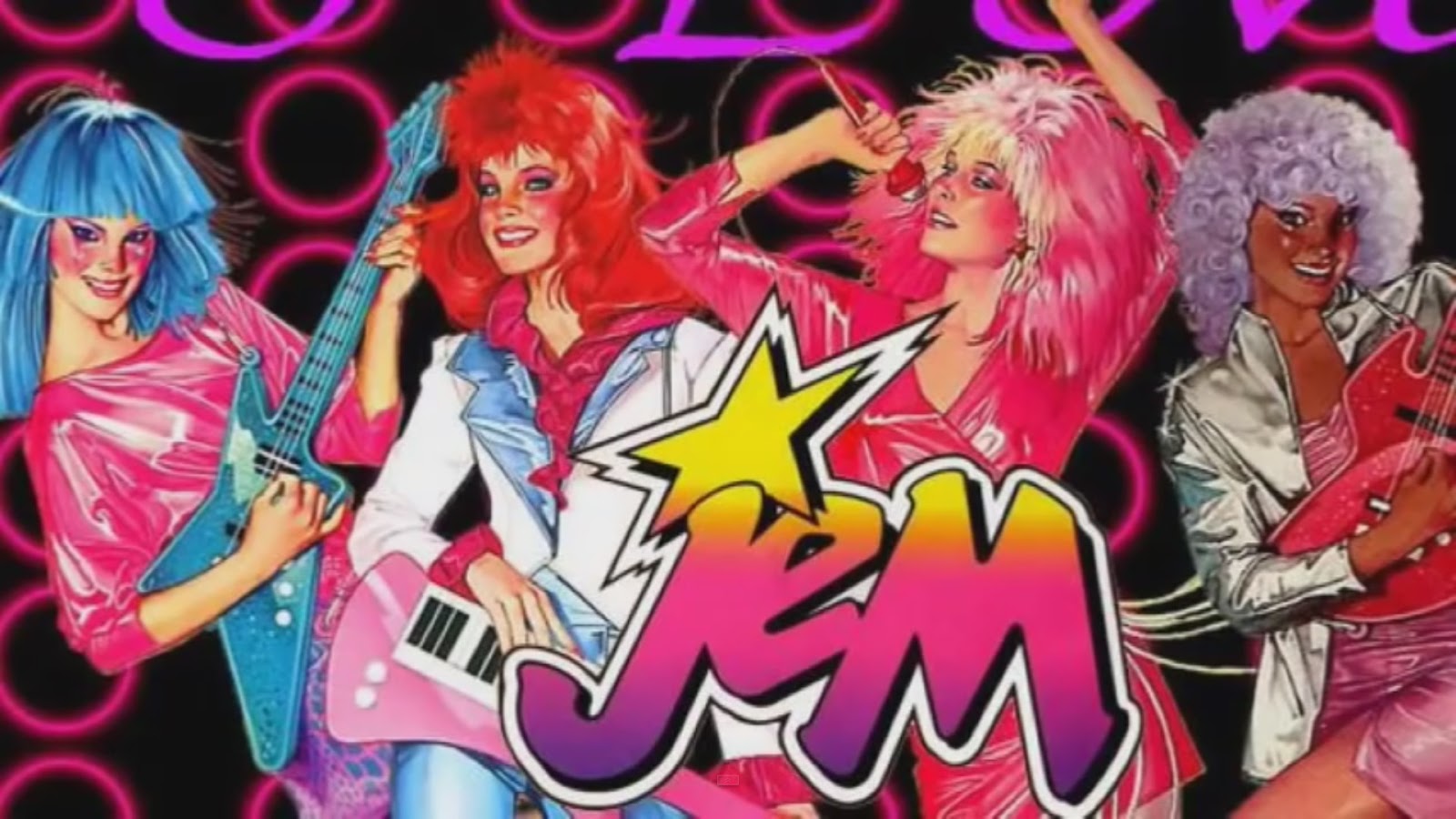
On a different note, I haven't forgotten about my Jem and the Holograms movie rant. I've found more information about the production of the movie. I need to do more research.
I'll try to post art soon. : )
On a different note, I haven't forgotten about my Jem and the Holograms movie rant. I've found more information about the production of the movie. I need to do more research.
I'll try to post art soon. : )
Friday, November 13, 2015
Jem and the Holograms Movie Rant Coming Soon
Tuesday, August 18, 2015
Jamie Hewlett Interview
I like to surround myself with people who are honest with me about who am I am and what I'm about.
https://youtu.be/_BSQQvNCqzI
The ego is a very dangerous thing and should be kept in a box under the bed ~ Jamie Hewlett. One of my favorite comic book artists. Many years ago, I first saw Tank Girl and was instantly enamored with her and her world. Since my tween years I've been into European comics via Heavy Metal Magazine so, Judge Dredd and Tank Girl were very interesting to me.
Trying to find the moment where you're lost in your work is 'being in the zone.' He let himself get interrupted too much. My problem is I've not been disciplined enough to get those things finished.
Wednesday, July 22, 2015
"ATTENTION ARTISTS" - REBLOGGED AS PER REQUEST
Copyright law is about to change...
For more than a year Congress has been holding hearings for the drafting of a brand new US Copyright Act. At its heart is the return of Orphan Works.
What does this mean for artists? it means it will make it easier for infringers to steal artists works and harder for people who are making or trying to make a living out of art more difficult. This will effect every artist and all the artwork they have created, are creating, and will be created. Corporates, Big businesses, and publishers want this to pass to make money out off artists works without paying us artists for past, current, and future artwork.
The Canadian Government has already expressed interest in following suit and adapting their laws to match this proposal if this bill passes.
- Basic Facts About The Law Being Proposed -
“The Next Great Copyright Act” would replace all existing copyright law.
- It would void our Constitutional right to the exclusive control of our work.
-It would “privilege” the public’s right to use our work.
- It would “pressure” you to register your work with commercial registries. - It would “orphan” unregistered work.
- It would make orphaned work available for commercial infringement by “good faith” infringers. - It would allow others to alter your work and copyright these “derivative works” in their own names.
- It would affect all visual art: drawings, paintings, sketches, photos, etc.; past, present and future; published and unpublished; domestic and foreign.
Ways to stop this or preventing these changes from happening....
Share, reblog this post, spread it for other artists to take notice and action. - You can submit a letter on how this law can be an issue for you as an artist in the U.S.
> > > DEADLINE IS THIS THURSDAY: JULY 23, 2015 < < <
Non-U.S. artists can email their letters to the attention of:
Catherine Rowland
Senior Advisor to the Register of Copyrights
U.S. Copyright Office
crowland@loc.gov
I wish had read a lot sooner than today.
The following blog is where I read this.
http://floobynooby.blogspot.com/2015/07/attention-artists.html
Tuesday, July 21, 2015
MY SHORT-FILM STORYBOARDS
These are some very rough boards I've been working on recently. Adobe Flash has been giving me some prompts informing me that it can not save my file. Somehow it actually does save the file and I can go back to using it as usual. The first panel of the third page is all wrong. I have to re-draw it. I've got a better idea. I'll adjust the camera left to end at that shot. That way the problem is solved in a much easier fashion.
Instead of continuing these boards in Flash, I will start over in Photoshop. I may start on that tomorrow. The whole reason for drawing them in Flash in the first place is I feel more comfortable drawing in Flash than Photoshop. Yeah, I know PS is great for this kind of thing but, Flash gives me nice black lines throughout an entire stroke. PS has come a long way since I first started using it during version 6. For instance, the brush engine is a lot nicer. At any rate, there are pros and cons for using both programs to create stroryboards. I might list them some other time.
Recently, I downloaded Toon Boom Storyboard Pro from Toon Boom's website. So far it looks pretty good. I've got some online training to get up to speed on it. So, by the end of the week I should have a working knowledge of it. When I have more personal time, I'd like to create storyboard of a fight, a couple of quite moments and, some dramatic moments to use in my professional portfolio.
To a Close Friend,
MS, I have not heard from you in a while. You asked me to create two paintings for you. I haven't forgotten. I gave you my word I would paint them for you. And, that's what I plan to do. After you read this hit me up sometime.
Eric : )
Sunday, July 19, 2015
SCENE BREAK DOWNS
SCENE BREAK
DOWNS
Eric R. Watson
Some Very Important Notes To Keep In Mind Before Storyboarding.
- · Go through the script. See what the story is about.
- · What’s the journey the character goes through? And, how can I put that on screen?
- · How can I bring out the inner qualities of a character?
- · How can I bring out what this person is feeling?
- · How can I interpret those things into playable actions?
- · How can I turn a vague script into something playable on screen?
- · Breakdown a script, determine what it’s really about and move toward that thing.
- · Create a Visual Expressions Narrative for each character. (Refer the script.)
- · How do I take a character through an emotional journey?
- · What is their psychological make-up into playable actions?
- · Design where things are located in each scene and how the lighting is set up.
- · What is the choreography for every character for each scene?
- · How do I design each shot to heighten the emotional effect of each scene?
Chris Oatley's website:
http://chrisoatley.com/
Justin Copeland Interviewed on Chris Oatley's Podcast:
http://chrisoatley.com/storyboard-portfolio/
Justin Copeland's Deviantart page:
http://jusdog.deviantart.com/
Sunday, July 12, 2015
Writing as a Drawing Tool
Writing as a drawing tool - yeah, that sounds weird.
If you wanted to work with words, you’d be a writer, right? This isn’t beautiful
writing, though. This is organizational, planning writing that I’m going to
talk about. Writing out a scene beat by beat in order to outline an entire
story is a good way to better understand mechanics of visual story telling. (I’ve
re-written the previous two sentences for better clarity.)
Full disclosure: I’m
not a visual thinker. If I’ve only met you a few times, I recall you in terms of
a general impression and descriptive words. I have no picture of you in my
head. It’s kind of crazy that I’ve gotten this far in this field without a
mind’s eye, but using writing as an intermediary between intention and drawing
has helped me a lot. If you’re a visual thinker you probably have your own
methods of working, but either way I hope this is useful. When I jump straight
into boards or thumbnailing, it can be easy to get lost or forget the point of
view I intended to convey in the scene. When I work straight ahead in either
writing or boarding - it’s easy for me to go down the rabbit hole of
possibilities. The farther down the rabbit hole you go, the harder it is to
distinguish which choices are serving my goals, because this option is
awesome — wait, and this one is, too. All of them are interesting and worth
pursuing, and sometimes I forget where I was going in the first
place. While that exploratory work is useful, it can be deadly when I’m crunched
for time. Not LITERALLY deadly but, deadly to productivity for sure. So that’s
where writing comes in. When I write down where the scene should end up, what
each character is doing, that’s one thing I don’t have to constantly grip in my
mind. I’ve got it on my notepad, and my mind is freed up to explore within the
constraints I’ve set down. It all seems clear in my head, but it helps to write
it down. Seeing the whole thing down on paper gives me a good look at where the
disorganized areas are, so I can make adjustments. When I go straight ahead,
it’s easy to tell myself I’ll figure it out when I get there… but, this brings
me to another point: Writing is so, so much faster than drawing. I’m not talking
about flowery description. I’m talking about basic “she goes there, he feels
this, because of this she does that,” etc. You can knock this out in five
minutes. Even looking at the bare bones it’s easy to see where you’re losing
the spirit of your pitch. I’d much prefer to find out that I’ve lost the spirit
of my pitch in five minutes than an hour later, after thumbnailing the whole
thing.
Here’s another advantage: I can write down my plan,
approve of it in sound mind, and have that paper with my plan for the scene or
story written on it when I am:
•tired
•drunk
•in the throes of self-doubt
•seduced
by the compulsion to change everything at the last minute
•wondering whether
this was ever a good idea and what is on TV (very subtly different from the
throes of self-doubt)
If you’re not convinced, you’re not convinced. If you are,
here are some guidelines: When you’re beating out a scene, think about WHY the
audience is watching - like, what do they want to find out? Think about what
they probably EXPECT will happen (so you can support that) and what ACTUALLY
happens (so you can surprise them with it). Write down everything that happens
in the scene. Descriptive words help (because again, when you’re tired and
can’t decide what the acting should be, you can look at your descriptive word
and just do that).
•She looks up, confused.
•Above: wasp nest on a tree
•Wasps
buzzing around it
•She is horrified
•She runs
For an outline - for your whole
story - things are a little different. A general guideline I use for writing
out an outline is that each of the following gets a paragraph:
•the concept of
the story
•who the main character is
•what is her place in the world
•what goes
wrong (inciting incident)
•how does she try to fix it (act 1 break)
•brief
description of complications (act 2)
•what really goes wrong (midpoint)
•low
point
•resolution (act 3)
It seems counter-intuitive that almost half of the
outline would be setup for the story, and that the end would be just one
paragraph, but this really does work and make sense when you need to see your
whole story in just a few pages.So next time you have a story idea, try writing
some things down before you start sketching your favorite moments. Maybe you’ll
like it.
(I forgot where I found this tidbit of information but, it's definitely
worth including here. And, I’m not sure who to give credit to for writing this.)
I'm glad to have found this on my hard drive. Since then, I've saved this into the Adobe Flash document that I'm creating my storyboards in. Also, I have Mark Andrews Lecture Notes I copied from two YouTube videos in the same Flash document. If you'd like to see the videos and read my notes here are the links to them:
Mark Andrews Lecture part 1
https://www.youtube.com/watch?v=lmd7YIHUI5M
Mark Andrews Lecture part 2
https://www.youtube.com/watch?v=3ayjNzBnFXo
My Notes on These Two Videos (300dpi print quality)
http://bleu-rain.blogspot.com/2014/05/mark-andrews-cal-arts-lecture-notes.html

Saturday, July 11, 2015
I'm Working on a Professional Storyboard Portfolio
I've been working on creating a storyboard portfolio. As you can see it's coming along nicely. The image looks a bit cramped so, I'll free up some space in it before posting the final boards.
The San Diego Comic Con is this week. Wednesday night was Preview Night. Thursday through Sunday is the actual convention. I wish I were there now. Maybe I'll post some videos from the convention posted by people who are attending it. The new Star Wars first look video is online at YouTube. After I see it I might link to it here.
Tomorrow, I might post about some of my artistic influences. Last week I started on it but, didn't finish it for this post.
Wednesday, March 18, 2015
The Youssef Drawing Syllabus - Movement & Form by Samantha Youssef
About Samantha Youssef
Samantha is the
founder of Studio Technique, an artistic training studio specialized in
the training and development of industry artists. She is the creator
of the Youssef Drawing Syllabus, a unique drawing program based on
various schools of academic draughstmanship, her experience as a feature
animator for Walt Disney, and her background in classical ballet where
she draws upon principles of movement and posing to design a progressive
and successful drawing program.
All images copyright Studio Technique Artistic Training inc. All rights reserved.
Samantha Youssef is a feature film character animator and visual developement artist. She is a former animator for Walt Disney Animation, and has animated and directed for Ubisoft cinematics. She is an award winner at the Toronto Film Festival for her animated short film La Fuga Grande.Film and gaming animation studios employ her to train their artists, and she has done masterclasses for animation studios, colleges, events and conferences around the world. Samantha has been featured in the media, including Chatelaine Magazine, Musique Plus, and Wired Magazine.
As founder of Studio Technique, Samantha offers a rich and extensive background in the arts. Her classical art background, along with her experience in feature film animation and the video game industry, has allowed her to create a unique program that offers specialized training to all varieties of artists. She graduated from Sheridan College's world-renowned animation program, completed the Gobelins intensive program in Paris, and has studied at prestigious art academies around the world. She is a former ballet dancer, and brings her understanding of dance, movement and physicality to her uniquely designed program of drawing and animation.
Read more at Studio Technique
https://youtu.be/uDMvtg6JoRk
Live Q&A, Demo and Critique session to celebrate the launch of the book Movement & Form, the Youssef Drawing Syllabus.
She's a classically trained animator. And, I've decided to buy this amazing book by Samantha Youssef. : )
Friday, March 13, 2015
More Storyboards

Unintentionally, I found a Chinese movie online starring Bingbing Fan entitled Double Exposure. She also starred in the recent X-Men: Days of Future Past as 'Blink.' She's a producer, singer and a phenomenal actress. I really am impressed by the lighting and cinematography in this film. That's why I've decided to reverse engineer the shots in this movie to understand how they were put together. Yes, these are very rough. Since this is not a movie blog and I'm not posting the link to the movie. The following is a very brief synopsis of this movie.
"When Song Qi stumbles upon her boyfriend's affair with her best friend, her life quickly starts falling apart and she is subsequently drawn into a quicksand of revenge and murder. Though all is not as it seems and Song Qi will have to embark on a twisted journey into her past and the very depths of her own mind... " - Written by Anonymous
Monday, March 9, 2015
33 Things I Need To Start Doing
These are 33 Things I need to start doing now. I need to spend less time surfing the web and more time navigating the real world. I'm here to tell ya, looking at other artist's work is a serious time drain. For the next week or so, I plan to start drawing more in my sketchbook, continue the two hundred Colors DS paintings I promised a close friend of mine. And, actually begin the paintings I promised to paint for her, and write and draw my very first 16 page comic book. Also, I plan to work on the storyboards I posted in the previous post. There's a whole list of things I've got in the works. Most of them will be evident soon and I'll keep you posted as to what those things are.
On a similar note, I've been thinking about buying a few of these sketchbooks to take with me when I go out to sketch on location. A few months ago, I viewed 'Victoria's Cal Arts Sketchbook' video. http://youtu.be/T1qtLUTxshc And, as I'm on the look out for really nice small sketchbooks I've decided to buy three of these to use with my cool brush pens. And, I've got some really nice writing pens that are great for archival purposes. I'll have to add on to this post or start another post entirely to tell you about them.
I would like to buy the 8"x6" inch version.
http://www.pentalic.com/journals/traveler-sketch.asp
http://www.jetpens.com/search?q=Pentel+Standard+Brush+Pen+-+Tsumi+Tip
Friday, February 20, 2015
Subscribe to:
Posts (Atom)